A shipment can be ready for dispatch, yet a missing certificate or an incorrect invoice can delay its clearance at the border. In international logistics, customs documentation is as important as transportation itself. But when something goes wrong, who is responsible for correcting it: the importer, the supplier or the freight forwarder? Understanding their individual roles helps businesses avoid documentation errors, minimise delays and keep cargo moving efficiently.
Customs documentation provides authorities with the information needed to identify goods, assess duties and taxes, and verify compliance with import and export regulations. Although the importer, supplier and freight forwarder work together throughout the shipping process, their responsibilities differ. Knowing who must provide accurate information and who coordinates the process is essential for effective freight management.
What Is Customs Documentation in International Shipping?
Customs documentation includes the paperwork and electronic records required to move goods across international borders. Requirements vary according to the destination, shipment type and nature of the goods.
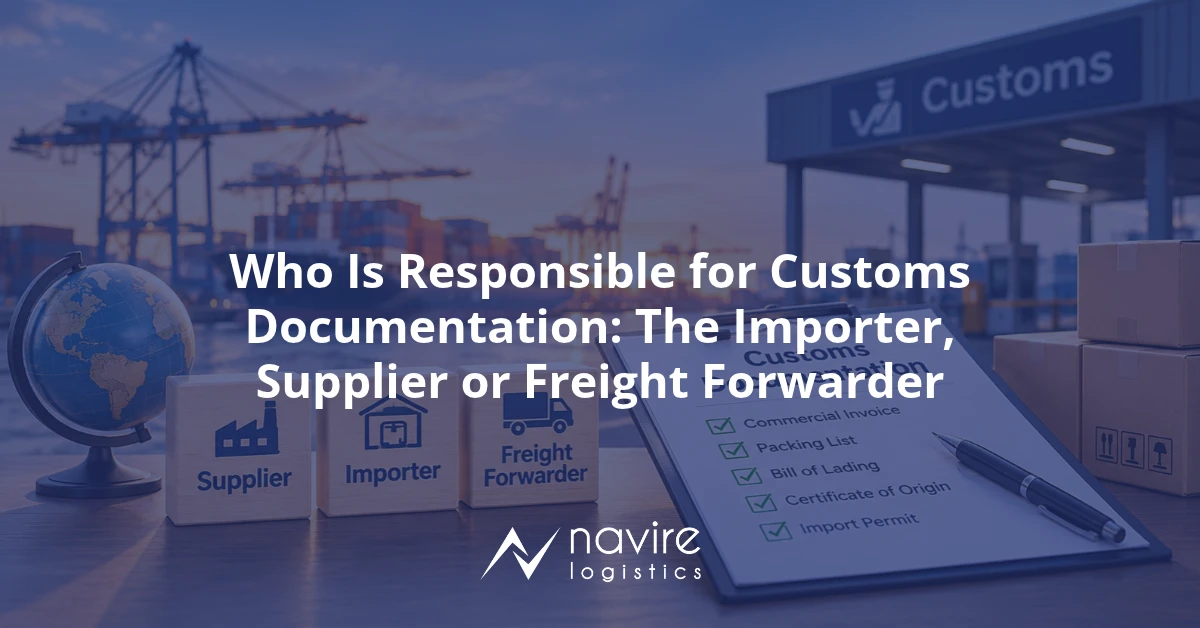
Common documents include:
- Commercial invoice: Details the goods, transaction value, buyer and seller.
- Packing list: Specifies shipment contents, quantities, packaging and relevant weights.
- Bill of lading or air waybill: Records key details of cargo transportation.
- Certificate of origin: Establishes the origin of goods where required.
- Customs declaration: Provides information submitted to customs authorities.
- Import or export permits: Required for certain regulated goods or transactions.
When documents contain incomplete or inconsistent information, customs authorities may request clarification or supporting evidence before releasing the cargo. Preparing accurate documents before dispatch helps reduce avoidable disruptions.
Who Is Responsible for Customs Documentation?
Responsibility and coordination are closely connected, but they are not the same. Responsibility concerns who must provide accurate information or fulfil a legal or contractual obligation. Coordination involves collecting documents, communicating requirements and ensuring that discrepancies reach the appropriate parties for resolution.
The importer, supplier and freight forwarder each have a distinct role, depending on the applicable regulations and the services agreed.
1. Importer: Ensuring Import Compliance
The importer is generally responsible for meeting the requirements applicable to bringing goods into the destination country. Depending on local regulations, this may include providing importer registration details, obtaining permits, supplying supporting information and meeting applicable duty and tax obligations.
The importer must ensure that the information used for its import declaration is accurate and that the required compliance steps are completed. Specific legal responsibilities depend on the jurisdiction and the customs representation arrangement.
For example, a business importing electronic equipment into the UAE may need to provide accurate product details and ensure that any required regulatory approvals are obtained by the appropriate party.
Providing complete information early and responding promptly to customs queries helps reduce avoidable clearance delays.
2. Supplier: Providing Accurate Commercial Information
The supplier or exporter typically provides accurate information about the goods and the commercial transaction. This commonly includes product descriptions, quantities, values and supporting documents such as the commercial invoice and packing list.
These details help customs authorities assess the shipment and determine whether additional documentation is necessary.
Consider a supplier shipping industrial machinery overseas. If the commercial invoice contains an incorrect value or incomplete product description, the supplier may need to provide corrected information and supporting evidence.
A freight forwarder can coordinate the correction, but the underlying commercial information must be confirmed by the appropriate party. This helps prevent inaccurate details from being carried into other shipping records or customs declarations.
3. Freight Forwarder: Coordinating Documentation and Clearance
The freight forwarder coordinates cargo movement between the supplier, importer, carrier and other logistics stakeholders. Depending on the agreed service, this may include collecting shipping documents, checking for apparent inconsistencies, communicating clearance requirements and arranging customs clearance.
Where specifically engaged and legally permitted, a freight forwarder may also prepare or submit customs declarations. In such cases, it must fulfil the obligations applicable to its role.
However, arranging transportation or forwarding documents does not automatically make the freight forwarder legally responsible for every detail supplied by the importer or supplier. Its obligations depend on the service agreement, customs representation arrangement and applicable regulations.
The key distinction is simple: the relevant party must fulfil its own obligations, while the freight forwarder coordinates the documentation and clearance activities included in its agreed services.
What Happens When Customs Documents Are Incorrect?
Documentation errors can result in additional customs queries, requests for supporting evidence, declaration amendments, inspections or delayed cargo release. If cargo remains at a port or warehouse longer than planned, additional storage and handling costs may also arise.
Common issues include mismatched invoice and packing-list details, inaccurate product descriptions, incorrect declared values, missing certificates and incomplete consignee information.
The responsibility for correcting an error depends on where it originated. A supplier may need to correct an invoice, an importer may need to obtain a missing permit, or a freight forwarder may need to amend a declaration it prepared.
The freight forwarder can communicate the discrepancy and coordinate the required actions within its agreed scope. Clear communication ensures that the appropriate party provides the correction and helps prevent further inconsistencies.
How Can Businesses Avoid Customs Documentation Delays?
An effective documentation process begins before the shipment is dispatched. Businesses can reduce avoidable issues by establishing clear responsibilities and checking information early.
- Verify documents before dispatch. Ensure that invoices, packing lists and relevant shipment details are accurate and consistent.
- Understand destination requirements. Confirm the documents, permits and approvals applicable to the goods and destination country.
- Define responsibilities in advance. Establish who prepares each document, who supplies the supporting information and who handles the customs declaration.
- Share documents early. Provide the required information to the freight forwarder and customs representative in time to identify missing details before clearance becomes urgent.
- Maintain clear communication. When additional information or corrections are required, the responsible party should respond promptly while the freight forwarder coordinates the process where appropriate.
These measures help businesses improve documentation accuracy, clarify accountability and manage cargo movement more efficiently. For more on how small errors add up, see how documentation errors affect LCL freight.
Simplifying Customs Clearance with Navire Logistics
Customs documentation is part of a larger logistics process in which accuracy and coordination can influence shipment timelines. Navire Logistics offers freight forwarding and customs clearance services to help businesses coordinate documentation requirements, work with relevant stakeholders and manage cargo movement across the supply chain.
By aligning shipment information, clearance requirements and transportation arrangements, Navire supports a more organised approach to international shipping. Where documentation gaps arise, coordination with the relevant parties helps establish what needs to be corrected and who must provide the necessary information.
Importers and suppliers remain responsible for their respective obligations, while the logistics partner helps coordinate the activities that connect documentation, clearance and transportation.
Planning an international shipment? Let Navire Logistics support your freight forwarding and customs clearance requirements with coordinated documentation, transportation arrangements and logistics support. Get in touch with Navire Logistics to discuss your shipment needs and move your cargo across borders with greater clarity and confidence.