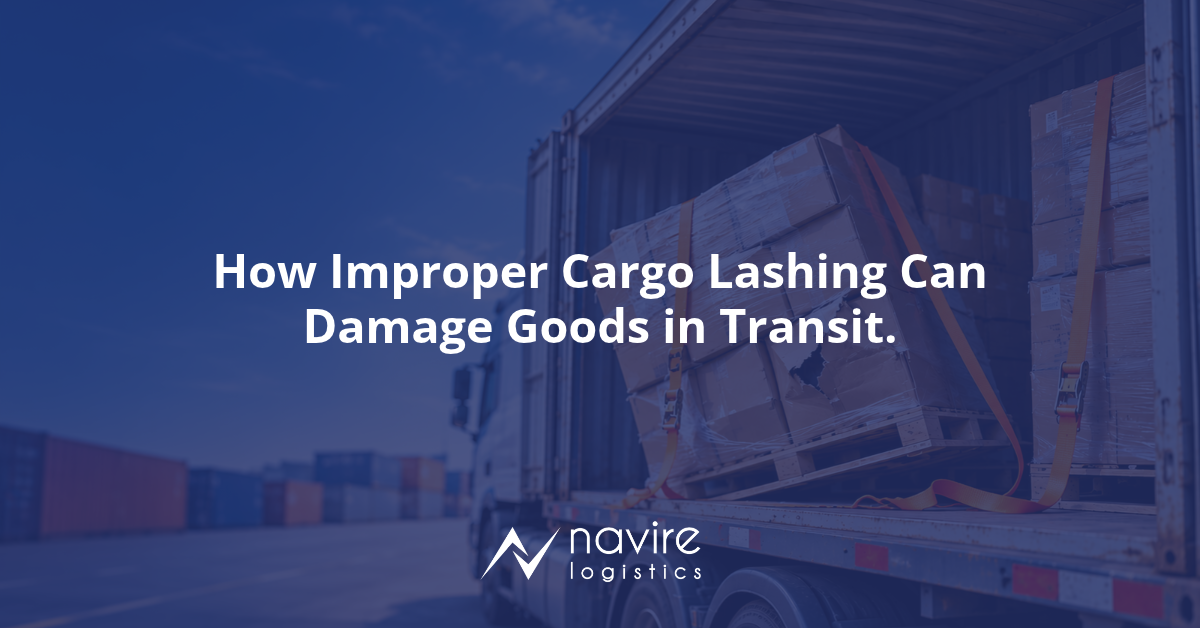
A shipment can be packed perfectly, loaded carefully and transported along the planned route, yet arrive at its destination with damaged goods. Sometimes, the problem is not the packaging or the journey itself, but what happens when cargo shifts because it was not secured properly.
From industrial machinery and steel components to palletised goods and containerised shipments, cargo faces movement, vibration, braking forces and changes in direction during transportation. At sea, vessel motion introduces additional forces. Without appropriate load securing, even well-packaged cargo can slide, tilt, collide with neighbouring goods or sustain serious damage.
For businesses importing and exporting across the UAE and GCC, cargo lashing and load securing are essential parts of shipment planning. Understanding how they work, why failures occur and how to prevent them can help protect valuable goods, reduce avoidable costs and maintain supply chain reliability.
What Is Cargo Lashing and Load Securing?
Cargo lashing involves using suitable restraints, such as straps, chains or other approved equipment, to hold cargo in position during transportation. Load securing is the broader process of preventing goods from sliding, tipping, shifting or falling during handling and transit.
Common methods include:
- Lashing: Restraining cargo with suitable straps, chains or other securing equipment.
- Blocking and bracing: Using appropriate supports to prevent unwanted movement.
- Dunnage: Placing suitable materials around or beneath cargo to support, separate or stabilise it.
- Anti-slip materials: Increasing friction between cargo and the loading surface where appropriate.
- Strapping: Holding compatible packages or items together to improve load stability.
The right method depends on cargo weight, dimensions, centre of gravity, packaging strength, securing points and transport conditions. A securing arrangement suitable for palletised cartons may not be appropriate for heavy machinery or irregularly shaped equipment.
The International Maritime Organization’s Code of Practice for Packing of Cargo Transport Units (CTU Code) provides guidance on packing and securing cargo for transportation by sea and land.
How Improper Load Securing Can Damage Shipments
1. Cargo Shifting During Transit
Vehicles accelerate, brake and turn, while ships experience movement caused by sea conditions. If cargo is inadequately restrained, these forces can cause it to slide, tilt or collide with other goods.
The resulting damage may include crushed cartons, broken components, unstable pallets and damaged machinery. In severe cases, shifting loads can also create safety risks for drivers, vessel crews and unloading personnel.
2. Damage Caused by Excessive Restraint
Securing cargo too loosely can allow movement, but excessive tension can also cause problems. Tight restraints may deform cartons, damage fragile components or place pressure on sensitive surfaces.
The objective is to restrain cargo adequately without damaging the goods, packaging or transport unit. Suitable equipment, correct positioning and appropriate tension are therefore essential.
3. Risks to Heavy and Specialised Equipment
Industrial machinery and oversized equipment require careful attention because of their weight, dimensions and centre of gravity.
If securing arrangements are unsuitable, equipment may shift, mounting points may be damaged, and unloading may become unsafe or difficult. Businesses should consider the cargo’s approved restraint points, weight distribution and handling requirements when planning transportation.
For complex or high-value shipments, competent personnel may need to develop a cargo-specific securing plan.
4. Problems During Multimodal Transportation
Cargo transported by road, sea and other modes may undergo several loading, unloading and transfer operations. Each stage creates opportunities for restraints to be disturbed or cargo to be exposed to additional movement.
A load secured for one transport stage may require reassessment for another. Businesses should therefore consider the full transportation journey rather than focusing only on the initial loading process.
Best Practices for Safer Cargo Lashing
Preventing cargo damage begins before a shipment leaves the loading facility.
- Inspect the cargo before loading. Check packaging condition, dimensions, weight and any special handling requirements. Damaged packaging or inadequate support should be addressed before dispatch.
- Plan weight distribution. Position cargo to maintain stability and comply with the transport unit’s loading limits. Avoid uneven arrangements that create unstable stacks or concentrate weight on unsuitable surfaces.
- Select suitable securing equipment. Restraints must have appropriate capacities and be compatible with the cargo and securing points. Equipment should be inspected for wear, damage and defects before use.
- Prevent movement in relevant directions. Consider sliding, tipping and shifting during braking, turning, vibration and vessel movement. Use appropriate combinations of lashing, blocking, bracing and anti-slip materials.
- Protect the cargo from restraint damage. Use suitable edge protection and load-spreading materials where necessary. Ensure that restraints do not cut packaging or place excessive pressure on fragile goods.
- Inspect before dispatch. Confirm that the load is stable, the restraints are correctly positioned and the arrangement follows the applicable loading and transport requirements.
- Review securing after handling. Where safe and practicable, inspect the arrangement at appropriate stages of multimodal transport. Any necessary adjustments should be carried out by competent personnel.
These measures should form part of documented loading procedures supported by suitable training and supervision.
How Poor Cargo Securing Affects Business Costs
Cargo damage can create expenses far beyond the value of the affected goods. Businesses may face inspection, repacking, additional handling, redelivery and replacement costs. Disputes over responsibility and insurance claims can also consume time and resources.
For manufacturers, damaged machinery or components may delay installation and disrupt production schedules. For exporters, damaged deliveries can affect customer relationships and future orders.
Proper load securing is therefore not simply a technical requirement. It is an important part of protecting shipment value, managing operational risk and maintaining delivery commitments.
How Navire Logistics Helps Businesses Manage Cargo Movement
Effective cargo protection begins with understanding the shipment’s requirements and coordinating appropriate transportation arrangements.
Navire Logistics provides air, sea and land freight forwarding, alongside logistics services relevant to specialised equipment and cargo handling. These services can support businesses moving general cargo, industrial goods and equipment across the UAE, GCC and international markets.
For shipments with particular securing requirements, businesses should communicate cargo dimensions, weight, packaging details, lifting points and handling restrictions during the planning stage. This information helps the logistics team assess the shipment and coordinate suitable arrangements for its movement.
Navire’s freight forwarding and specialised cargo logistics services can form part of a coordinated approach to cargo movement, from selecting the appropriate transport mode to arranging the handling and transportation requirements of the shipment. Specific lashing equipment, technical securing designs and specialist engineering support should be confirmed according to the cargo and service scope.
By considering cargo characteristics and securing requirements before transportation begins, businesses can make more informed logistics decisions and reduce avoidable risks throughout the shipment journey.
Secure the Load Before the Journey Begins
Ultimately, safe transportation depends on more than selecting the right route or vehicle. It requires proper preparation, suitable load securing and effective coordination at every relevant stage.
For businesses moving cargo across the UAE, GCC and international markets, securing a shipment properly is an essential step towards protecting goods, controlling avoidable costs and keeping supply chains moving.