
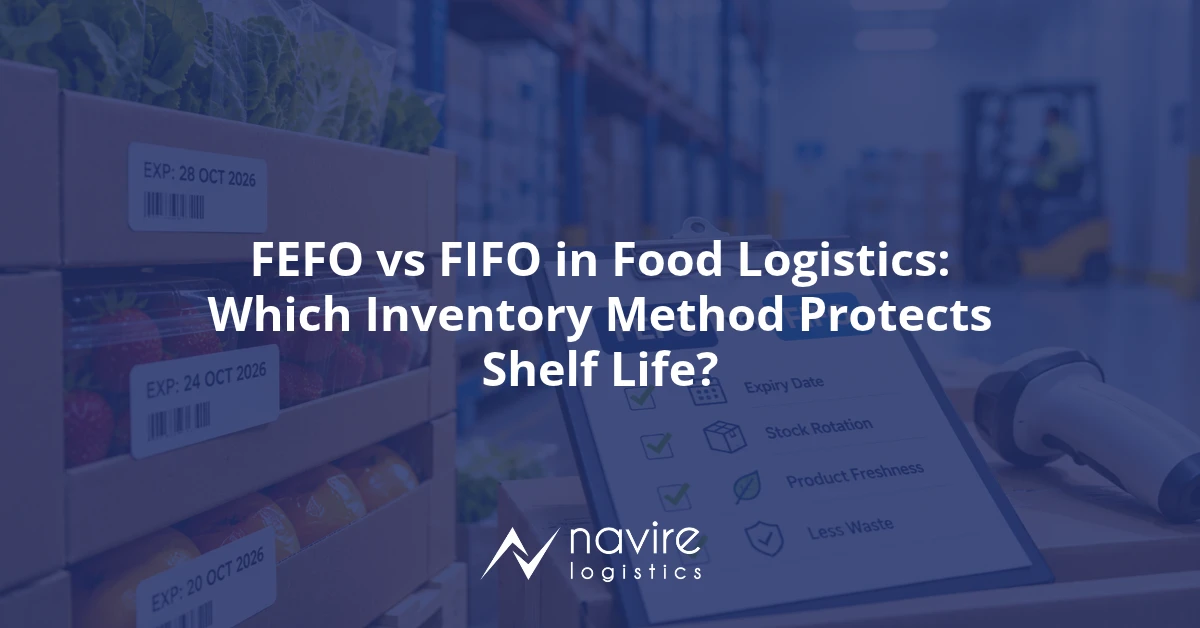
A food shipment can arrive on time, reach the warehouse in good condition and still become a financial loss simply because the wrong batch was dispatched first.
For food importers, distributors and retailers, inventory rotation is not just about organising shelves. It is about ensuring that products move through storage and distribution before their remaining shelf life becomes a commercial problem. When different batches have different expiry dates, following the order in which goods arrived may not always be the best approach.
This is where FEFO (First Expired, First Out) becomes important. Unlike FIFO (First In, First Out), which prioritises the stock received first, FEFO prioritises products with the earliest expiry dates. Understanding the difference helps food businesses make better inventory decisions, reduce avoidable waste and coordinate deliveries more effectively.
For businesses operating across the UAE and GCC, where food products may pass through international freight, customs clearance, warehousing and regional transportation, choosing the right stock rotation method is an important part of managing the supply chain.
What Is FIFO in Food Logistics?
FIFO stands for First In, First Out. Under this method, the products received or produced first are generally dispatched before newer stock of the same product.
The objective is to prevent older inventory from remaining in storage while newer deliveries are used first. When applied consistently, FIFO can help businesses maintain orderly stock rotation and reduce the risk of inventory being overlooked.
For example, a food distributor receives a batch of packaged biscuits on 5 October and another batch on 12 October. Under FIFO, the earlier batch is selected for dispatch first, provided it is suitable for sale and meets the customer’s requirements.
However, FIFO follows the sequence of receipt or production rather than the expiry date. If the newer batch expires sooner than the older one, dispatching stock strictly according to arrival order may not be the most appropriate decision.
This is one of the main limitations of relying on FIFO alone when managing date-sensitive food products.
What Is FEFO in Food Logistics?
FEFO stands for First Expired, First Out. Instead of prioritising the arrival date, this method prioritises the product with the earliest expiry or applicable date marking.
Consider a food distributor holding two batches of packaged yoghurt:
- Batch A: Received on 5 October; expiry date of 25 October.
- Batch B: Received on 9 October; expiry date of 20 October.
Under FIFO, Batch A would normally be dispatched first because it arrived earlier. Under FEFO, Batch B takes priority because it expires sooner.
This distinction matters because the time remaining before expiry may be more relevant to dispatch decisions than the date a shipment entered the warehouse.
FEFO helps businesses identify products that need to move through distribution first, provided they remain safe, suitable and compliant with applicable requirements. It does not mean that expired, damaged or improperly stored products should be dispatched simply because they have priority in the inventory sequence.
FEFO vs FIFO: What Is the Difference?
Although both methods support inventory rotation, they serve different purposes.
| Factor | FIFO | FEFO |
|---|---|---|
| Stock selection | Oldest received or produced first | Earliest expiry date first |
| Main priority | Receipt or production sequence | Remaining shelf life |
| Best application | Products where arrival order is a suitable rotation basis | Date-sensitive products with varying expiry dates |
| Information required | Receipt dates and stock records | Accurate expiry dates and batch records |
| Main limitation | May overlook a newer batch that expires sooner | Requires reliable batch-level expiry information |
For food businesses handling products with different shelf lives, FEFO is often the more appropriate method for deciding which eligible batch should be dispatched first. FIFO remains useful for products where receipt order provides a suitable basis for rotation.
Businesses can also combine the two approaches. FIFO can help organise physical stock, while FEFO determines the picking priority based on expiry dates.
Why Does FEFO Matter for Food Businesses in the UAE and GCC?
Food supply chains across the UAE and GCC can involve international suppliers, port operations, customs clearance, storage facilities and multiple distribution destinations. Each stage takes time, and that time affects how much shelf life remains when products reach their final destination.
1. Reducing Expiry-Related Inventory Losses
Products that remain in storage for too long may become difficult to sell before their expiry dates. This can result in discounts, rejected deliveries, returns where permitted or food waste.
FEFO helps warehouse teams identify stock that should be prioritised for dispatch. When combined with demand forecasting and suitable order allocation, it can help businesses make better use of their available inventory.
However, FEFO alone cannot eliminate waste. Purchasing quantities, customer demand, storage conditions and delivery schedules also influence whether products reach customers in time.
2. Protecting Remaining Shelf Life During Distribution
A product may leave a warehouse with sufficient shelf life but reach a retailer with less time available for sale than expected.
For example, a distributor supplying multiple retail outlets must consider the remaining shelf life required by each customer, the expected transit time and the time needed for receiving and shelf replenishment.
FEFO helps identify which batches need priority, while transportation planning helps ensure that the selected stock can reach its destination within the required timeframe.
3. Improving Inventory Visibility and Traceability
Effective FEFO implementation depends on knowing which products are stored, where they are located and when they expire.
Recording batch numbers, receipt dates, expiry dates and quantities received or dispatched helps businesses make informed decisions. These records can also support the identification of affected stock when a product quality concern or recall arises.
Without accurate inventory information, staff may select stock based on convenience rather than expiry priority, undermining the purpose of FEFO.
4. Supporting Food Quality and Safety
Stock rotation is only one part of food logistics. Products must also be stored and transported under conditions appropriate to their characteristics.
Temperature-sensitive goods may require refrigeration, freezing or other controlled conditions. Temperature deviations, damaged packaging and unsuitable handling can compromise product quality or safety regardless of whether FIFO or FEFO is followed.
Consequently, businesses should combine inventory rotation with appropriate storage controls, handling procedures and transportation arrangements.
How Can Businesses Implement FEFO Effectively?
Moving from basic stock rotation to expiry-led inventory management requires coordination between purchasing, warehouse and logistics teams.
- Record expiry dates at receiving. Check batch details, quantities, date markings and packaging condition when goods arrive. Enter the relevant information into the inventory records before the stock becomes available for dispatch.
- Organise stock by expiry priority. Make expiry dates visible on cartons, pallets or storage locations. Warehouse staff should be able to identify priority batches without compromising safe handling or storage requirements.
- Use appropriate inventory systems. A warehouse management system can help track batch-level information, flag products approaching expiry and guide picking decisions. Businesses should ensure that digital records remain consistent with physical stock.
- Review short-dated inventory regularly. Compare remaining shelf life with expected demand, customer requirements and delivery lead times. This allows businesses to identify potential issues early and adjust purchasing or distribution plans where appropriate.
- Coordinate dispatch with transportation. Selecting the correct batch is only the first step. The delivery schedule, handling arrangements and transport conditions must also suit the product and destination.
- Establish exception procedures. Expired, damaged, recalled or potentially unsafe products must be identified and handled according to applicable procedures. FEFO must never override food safety requirements.
These practices help turn expiry-date information into practical decisions rather than leaving it as a record that warehouse teams rarely use.
How Navire Logistics Supports Food Supply Chain Operations
Effective shelf-life management depends on more than warehouse procedures. Food products must also move through the supply chain with appropriate handling, storage and transportation arrangements.
Navire Logistics provides logistics services relevant to these requirements, including freight forwarding, warehousing, GCC transportation and food logistics. These services can support businesses coordinating the movement of food products from origin to storage and onward distribution.
For food businesses handling perishable or date-sensitive goods, the key is to align logistics planning with the characteristics of the cargo. Appropriate transportation arrangements, organised storage and coordinated dispatch schedules can help businesses manage the operational challenges associated with limited shelf life.
By considering storage requirements, dispatch priorities and delivery schedules together, businesses can make more informed logistics decisions and reduce the risk of avoidable delays or inventory losses.
Choosing the Right Inventory Method
Ultimately, FIFO determines which stock arrived first, while FEFO identifies which eligible stock should be prioritised based on its expiry date. For businesses handling date-sensitive food products, understanding this distinction is an important step towards better stock rotation, more efficient distribution and responsible food waste management.
When shelf life matters, the right inventory method is not simply about what arrived first. It is about making sure suitable products move through the supply chain at the right time.



