
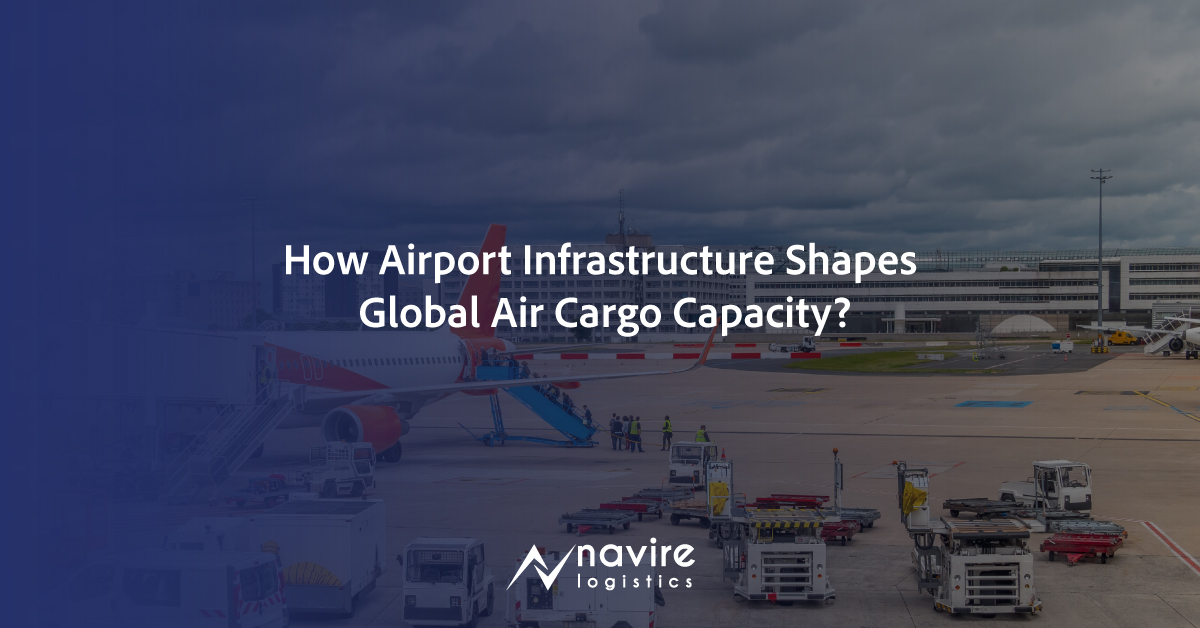
The Role of Airport Infrastructure in Global Air Cargo Capacity
When we talk about global trade, one thing always stands out, which is the speed at which goods can move across the world. This is where global air cargo capacity becomes the backbone of international logistics. Every shipment of medicines, electronics, fresh fruits, or urgent supplies depends on how well airports are designed to handle freight. And the truth is, without strong airport infrastructure for air cargo, there is no way the world can keep up with today’s growing demand.
Think about it for a moment. Every package that flies across countries passes through airports, and these airports are more than just take-off and landing spots. They are massive logistics hubs that determine how smooth or complex the cargo journey will be. From air cargo handling capacity to cargo terminal modernization, from runway capacity logistics to cold chain air cargo facilities, everything inside an airport directly shapes how much freight can be moved at any given time. The more an airport invests in air freight infrastructure, the stronger its role becomes in expanding global air cargo capacity.
This makes the topic not just technical, but essential to the way we live. Let’s dive deeper into how airport infrastructure is shaping the future of global trade.
Airport Infrastructure Air Cargo
Most people think of airports as passenger spaces, boarding gates, lounges, and runways filled with travelers. But behind the scenes lies an even bigger story: airport infrastructure, Sky Shipment. This part of the airport works day and night to move goods across continents, connecting farmers to markets, manufacturers to consumers, and businesses to opportunities.
Without strong Shipment infrastructure, even the fastest aircraft cannot make deliveries on time. The layout of warehouses, the speed of scanning machines, the size of parking bays, and the movement of trucks all combine to define the actual strength of an airport. And when this infrastructure is lacking, the entire supply chain slows down. That’s why airports that focus on Shipment infrastructure quickly rise to become global trade leaders, while others struggle to keep up.
Air Cargo Handling Capacity and Why It Matters So Much
If there is one phrase that defines efficiency at airports, it is Sky Shipment handling capacity. This refers to how much Shipment an airport can process in a given time. It’s not only about storage space but also about the technology, workforce, and planning that go into managing shipments.
Imagine an airport flooded with packages but lacking modern equipment to sort them quickly. Delays pile up, flights leave half-empty, and global supply chains suffer. On the other hand, airports with advanced tracking systems, automated scanners, and organized Shipment flows can move thousands of tons smoothly. This is why increasing Sky Shipment handling capacity is always at the top of the list when governments and logistics companies discuss improving trade performance.
How Cargo Terminal Modernization is Turning Old Spaces into Smart Hubs
For decades, Shipment terminals were simple warehouses with limited functions. But the surge in e-commerce, pharmaceuticals, and perishable exports has changed the game completely. Now, Shipment terminal modernization is no longer an option; it’s a necessity.
Modern terminals are smart. They use AI-powered systems, robotics, and digital tracking to make sure every piece of Shipment is monitored from arrival to departure. This reduces human error, speeds up delivery, and allows airports to manage larger volumes without chaos. In fact, the airports that lead global rankings today are those that invested early in Shipment terminal modernization. These upgraded spaces turn airports into prevailing engines for increasing global Sky Shipment capacity, ensuring that goods never sit idle longer than they should.
Runway Capacity Logistics
Whenever we think about Shipment, terminals, and warehouses come to mind first. But in reality, runway capacity logistics is just as necessary. Why? Because without enough runway space, even the best Shipment terminals can’t function properly.
Every Shipment flight needs a slot to take off or land. When an airport is crowded and its runways are overloaded, Shipment flights often get delayed, leading to losses and inefficiencies. Expanding runway capacity logistics means airports can welcome more flights, including larger aircraft explicitly designed for freight. This directly impacts global Sky Shipment capacity, because the more planes an airport can handle, the more goods it can move.
Cold Chain Air Cargo Facilities
Not all goods can be stored in normal warehouses. Medicines, vaccines, fresh seafood, fruits, and flowers all require specific temperatures. This is where cold chain Sky Shipment facilities become a turning point.
Without these specialized storage and handling systems, perishable goods would lose their value before they even reach the consumer. Modern airports are now competing to build advanced cold storage areas that ensure constant temperature control from the moment goods land to the time they are shipped out. These facilities don’t just support trade; they expand it. Countries with robust cold chain Sky Shipment facilities can export more perishable goods, enter new markets, and enhance their economies by strengthening global Sky Shipment capacity through infrastructure development.
Air Freight Infrastructure Investment
Every airport that leads the world in Shipment handling has one thing in common: continuous Sky freight infrastructure investment. The demand for air shipments is not slowing down. In fact, it’s increasing every year due to globalization, e-commerce, and the demand for fast deliveries.
To keep up, airports need more than just quick fixes. They need long-term investments in runways, terminals, warehouses, digital technologies, and sustainable solutions. This is where governments, private companies, and logistics providers must work together. When money is invested in innovative ways, airports gain the strength to expand Sky Shipment handling capacity, modernize their terminals, and build advanced cold chain Sky Shipment facilities. In short, the correct Sky freight infrastructure investment sets the stage for future-ready global trade.
Global Air Cargo Capacity and Its Challenges
Even with all these improvements, boosting global Sky Shipment capacity is not without challenges. Many airports face land shortages, making it difficult to expand runways or build larger terminals. Others struggle with the high costs of Shipment terminal modernization or the environmental impact of expansions. Regulations, sustainability goals, and community concerns also add layers of complexity.
Yet, airports that innovate and find innovative solutions continue to lead. By balancing runway capacity logistics, improving Sky Shipment handling capacity, and focusing on sustainable air freight infrastructure investment, they create stronger systems that push global trade forward.
The Future of Airport Infrastructure and Air Cargo
Looking ahead, the airports of the future will not just be transport hubs; they will be intelligent ecosystems. Digital transformation is already reshaping airport infrastructure and Sky Shipment with AI-driven tracking, blockchain-based documentation, and predictive analytics. These tools will enable Shipment movements to be faster, safer, and more transparent.
Moreover, sustainability will play a bigger role. Airports are moving towards energy-efficient designs, electrified ground equipment, and eco-friendly materials to ensure that growth in global Sky Shipment capacity does not come at the cost of the environment.
And finally, global collaboration will define the future. For actual efficiency, countries, logistics providers, and airlines must collaborate to establish unified standards for cold chain Sky cargo facilities, Shipment terminal modernization, and digital cargo systems. Only then can the world reveal the full potential of global Sky cargo capacity.
Shaping the Future of Global Trade
At the end of the day, global Sky cargo capacity is more than just about planes in the sky. It is about the strength of the infrastructure on the ground runways, terminals, warehouses, and cold storage facilities. It is about innovative cargo terminal modernization, strategic Sky freight infrastructure investment, and constant improvement in Sky cargo handling capacity.
Airports that invest in these areas will not only shape their own futures but also the future of international trade. The world runs on speed, reliability, and efficiency, and it is clear that airport infrastructure and Sky cargo are the key that reveals it all.



