
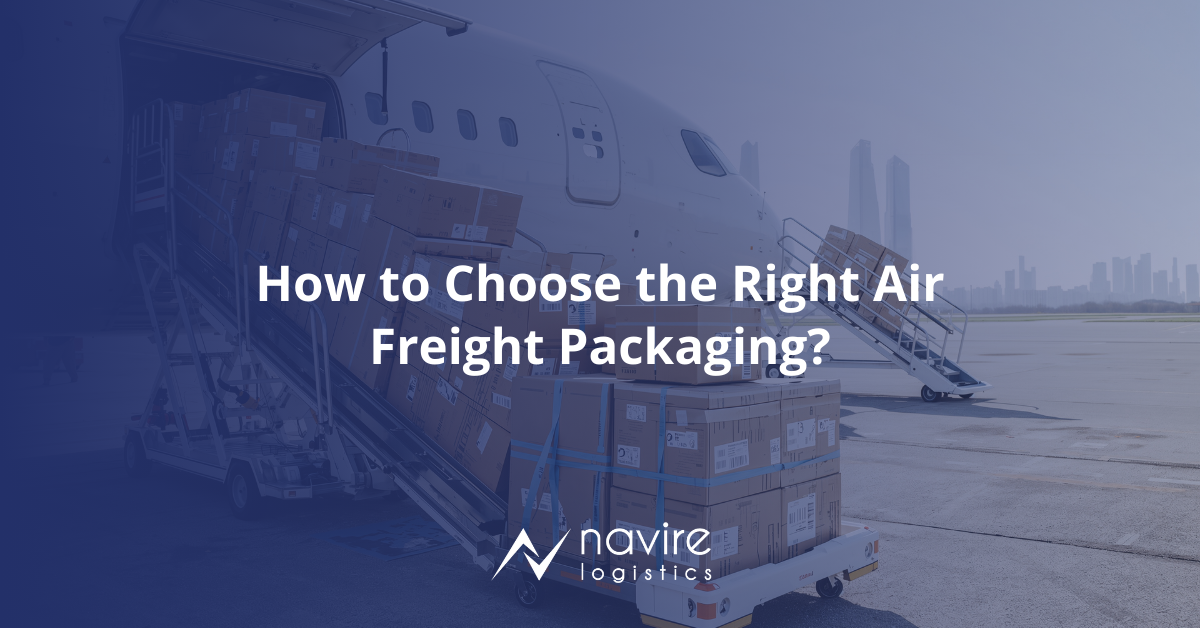
What keeps your goods safe often goes unseen – Right Air Freight Packaging choices matter more than you think. Millions of dollars’ worth of air travel each day still ends up lost or damaged, even when flights run on time. Problems at border checks do happen, true, but poor wrapping beats them every time. The real issue? Too many send out without picking the right system from the start.
A load moves across several airfields – navigating robots, handling shifting air pressure at great heights, then rushing in and out of terminals fast. By the time it arrives, has the case made it intact? Many exporters begin to question the strength of air cargo boxes only after damage occurs.
Nowhere is compliance more pressing than in how air cargo gets wrapped. Choosing the Right Air Freight Packaging just as important as checking boxes correctly under IATA rules. Tips that actually work? Shippers know them when they see them. Then there is weight – lighter without weakening – and cold-chain reliability, both rising fast. Meet these demands, and risk slips away.
A different kind of resource, this guide from Navire Logistics digs deeper than quick fixes. Instead of just scratching the surface, it shows what happens when Right Air Freight Packing takes charge – saving money, cutting delays in customs, moving faster through checkpoints, while strengthening steady partnerships across international skies.
Why Right Air Freight Packaging Matters More in Air Cargo Than Any Other Mode
Speed changes how Packing works on flights – mistakes aren’t tolerated like they are with ships. When things move by air, errors have a greater impact because rules constrain what happens at ground level. Performance matters most when weight, time, and safety weigh equally. Pressure builds quickly if containers fail mid-flight rather than weeks later at port.
Up and down in minutes, air cargo faces constant shifts in altitude plus rattling movement, weight stress, and tight schedule turns. Packaged wrong? Chances are, cargo is rejected long before take-off. So strong suits today aren’t only shielded goods – they handle quick trips, follow rules without delay.
When shippers handle Aerial Cargo boxes from the start, they avoid last-minute repairs, flight delays, or financial headaches down the line.
How to Choose Air Freight Packaging Based on Cargo Behaviour
Start by seeing how your cargo moves on flights. Cargo reacts differently when lifted above the clouds. Packing is tailored to the item’s shape. That order matters more than you think.
Fragile High Value Cargo
For items such as electronics, glassware, or medical tools, shock and vibration resistance is critical; strong main boxes paired with smart padding perform well.
Heavy or Dense Cargo
When it comes to factory equipment, toughness matters, for air shipping, strong yet lightweight boxes are non-negotiable – they must guard the item without piling up on shipping limits.
Perishable and Sensitive Goods
Getting goods such as medicine or seeds there safely requires maintaining stable temperatures during air shipping. What travels often needs cold conditions just to stay usable.
Air Freight Packaging Guidelines That Every Shipper Must Understand
Air freight Packing guidelines exist to ensure safety across global aviation networks. These guidelines influence how cargo is packed, labelled, stacked, and handled.
Following Aerial Cargo Packing guidelines ensures that the Packing:
◾ Withstands pressure changes
◾ Prevents leakage or spillage
◾ Maintains stability during turbulence
◾ Supports safe aircraft loading
The Right Aerial Cargo Packing aligns with these principles while maintaining efficiency and cost control.
IATA Air Freight Packaging Requirements and Why Compliance Is Non-Negotiable
IATA Aerial Cargo Packing requirements are the backbone of international air cargo safety. Airlines worldwide rely on these standards to ensure consistency and risk management.
Key Areas Covered by IATA Aerial Cargo Packing Requirements
◾ Package strength and integrity
◾ Closure and sealing methods
◾ Labelling and markings
◾ Special cargo and dangerous goods handling
Failure to comply with IATA Aerial Cargo Packing requirements often results in shipment refusal, fines, or long delays. Choosing the Right Aerial Cargo Packing eliminates these risks before cargo reaches the airport.
Best Packaging for Air Cargo – Materials That Actually Work
Selecting the best Packing for air cargo involves balancing protection, weight, and handling efficiency. Over-Packing increases cost, while under-Packing increases risk.
Commonly Used Air Freight Packaging Materials
Packaging Material | Best Use Case | Benefit |
Corrugated Boxes | General cargo | Cost-effective, flexible |
Wooden Crates | Heavy machinery | Structural strength |
Plastic Containers | Reusable shipments | Moisture resistance |
Foam & Air Cushions | Fragile items | Shock absorption |
The Right Aerial Cargo Packing uses the right combination of these materials based on cargo type and route.
Lightweight Durable Packaging for Air Freight and Cost Control
Lightweight, durable Packing for Aerial Cargo is one of the smartest cost-saving strategies in aviation logistics. Since Aerial Cargo charges are based on volumetric weight, heavy Packing can quietly double shipping costs.
The Right Aerial Cargo Packing reduces unnecessary weight while maintaining resistance to compression and impact. Advanced materials now allow shippers to achieve durability without sacrificing efficiency.
Companies that master the selection of Aerial Cargo Packing with lightweight solutions achieve faster transit times and better freight rates.
Air Cargo Packaging Tips for Shippers Who Want Zero Surprises
Proven air cargo Packing tips for shippers come from experience, not theory. The Right Aerial Cargo Packing anticipates real-world handling scenarios.
Essential Air Cargo Packing Tips for Shippers
◾ Secure internal movement completely
◾ Reinforce stress points and edges.
◾ Use high-quality sealing materials.
◾ Ensure labels remain visible throughout transit.
Applying these air cargo Packing tips for shippers dramatically reduces damage incidents and insurance claims.
Temperature Controlled Air Freight Packaging for High-Risk Cargo
Temperature-controlled Aerial Cargo Packing is essential for shipments where even small temperature fluctuations can cause damage or spoilage.
Industries relying heavily on temperature-controlled Aerial Cargo Packing include pharmaceuticals, biotechnology, food, and chemicals. The Right Aerial Cargo Packing uses insulated containers, gel packs, dry ice, or active temperature-control units, depending on transit duration.
Failing to invest in proper temperature-controlled Aerial Cargo Packing often results in product loss that far exceeds the Packing costs.
What a Right Air Freight Packaging Improves Speed, Safety & Trust
The Right Aerial Cargo Packing accelerates cargo movement by reducing inspections, rejections, and repacking. Airlines trust compliant Packing, customs clear it faster, and handlers process it with confidence.
When Aerial Cargo Packing guidelines and IATA Aerial Cargo Packing requirements are met, air cargo moves as intended, fast and smoothly.
Why Navire Logistics Is the Expert in Right Air Freight Packaging
At Navire Logistics, Right Air Freight Packing is a strategic service, not an afterthought. Our specialists understand how to choose air freight Packing based on real-world air cargo conditions.
We design solutions that meet air freight Packing guidelines, comply with IATA requirements, incorporate lightweight, durable Packing, and protect sensitive goods with advanced temperature-controlled air freight Packing.
Right Air Freight Packaging Is a Smart Business Decision
Right Air Freight Packaging is the difference between predictable success and avoidable loss. Businesses that invest in proper packaging gain cost control, cargo safety, and customer confidence.
By understanding how to choose air freight packaging, using the best packaging for air cargo, following air freight packaging guidelines, and applying expert air cargo packaging tips for shippers, companies can future-proof their air freight operations.
With Navire Logistics, your packaging becomes a competitive advantage every shipment, every time.



