
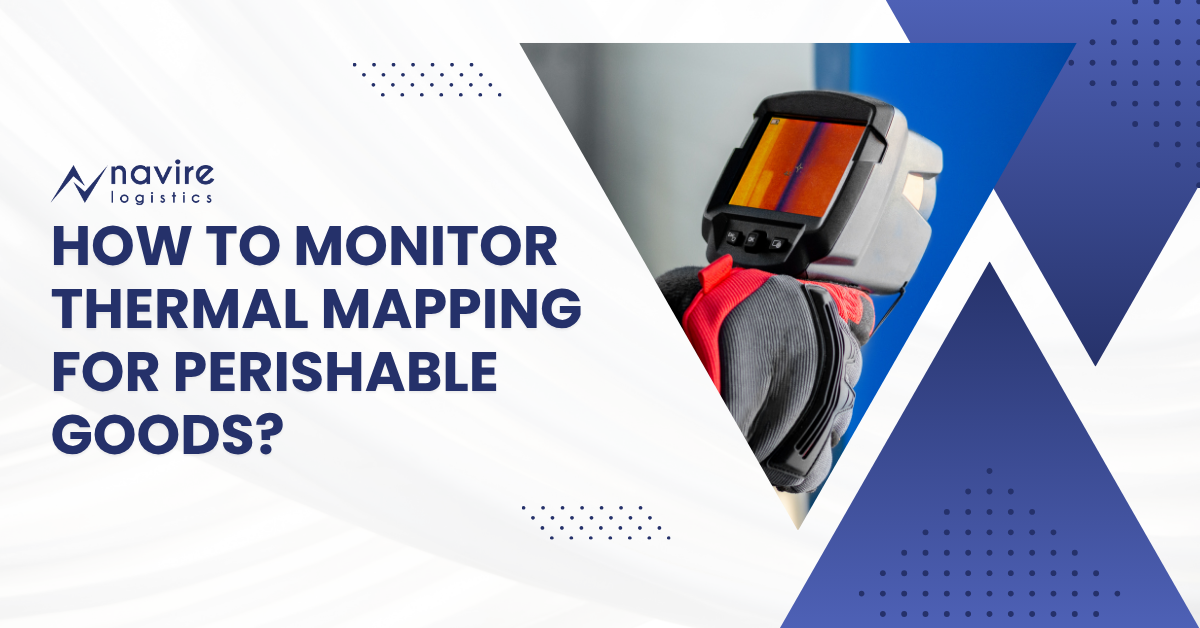
Thermal mapping perishable goods has become essential in today’s demanding global logistics industry. The sensitivity of perishable items to temperature changes remains high because they require precise temperature control. The key elements for ensuring compliance and safety and customer satisfaction include thermal mapping in logistics and temperature mapping studies and data logger usage for cold chain monitoring.
Temperature mapping for perishable goods protects both the quality and longevity of products throughout their journey from warehouse to delivery and ensures the integrity of cold storage systems. Businesses that implement perishable goods temperature control systems minimize the chances of spoilage and regulatory noncompliance and profit reduction. Navire Logistics provides trust through their cargo delivery by using advanced cold chain temperature monitoring methods.
What Is Thermal Mapping for Perishable Goods?
The method of thermal mapping perishable goods involves systematic temperature monitoring and validation of controlled storage environments including warehouses and refrigerated trucks and cold rooms. Multiple sensors or data loggers for cold chain are placed throughout the space to record temperature readings during a specific period.
Key Objectives of a Temperature Mapping Study
> Identify temperature hot and cold spots
> Verify HVAC system effectiveness
> Ensure even distribution of cold air
> Test backup systems during power loss
> Comply with regulatory guidelines (GxP, WHO, FDA)
A temperature mapping study exists to guarantee perishable products stay within optimal temperature ranges which prevents quality deterioration.
Importance of Thermal Mapping in Logistics
Maintaining the correct temperature throughout the supply chain is crucial. Thermal mapping in logistics ensures that warehouses, transport vehicles, and storage facilities meet the necessary environmental conditions.
Impact on Cold Chain Temperature Monitoring
The supply chain process of cold chain logistics requires temperature-sensitive products to move through controlled environments. Real-time temperature monitoring in cold chain operations allows logistics teams to take immediate action when any deviation happens.
Key Benefits:
> Maintains compliance with regulatory standards
> Minimizes product wastage
> Improves customer satisfaction
> Prevents financial losses
Navire Logistics provides intelligent monitoring solutions to create seamless and reliable temperature mapping for perishable goods.
Steps to Perform Temperature Mapping in Warehouses
A temperature mapping warehouse approach requires careful planning and execution. Here’s how you can get it right,
Step 1 – Planning the Temperature Mapping Study
Begin by identifying:
> The product type and sensitivity
> The duration of the study (typically 7-14 days)
> Environmental conditions (season, humidity)
Step 2 – Placement of Sensors
Use data loggers for cold chain at:
> Corners and center of the warehouse
> Near doors, vents, and ceilings
> Shelving areas
This helps reveal uneven temperature distributions.
Step 3 – Data Collection & Analysis
Regular monitoring and data downloading should be performed through software tools. The system should be monitored for changes that occur during peak usage periods and HVAC cycle transitions.
Step 4 – Validation & Reporting
Document every step:
> Mapping results
> Identified cold/hot zones
> Recommendations for corrective action
The documentation process prepares for audits while maintaining consistent perishable goods temperature control.
Role of Technology in Temperature Mapping
Modern logistics has adopted digital innovation to achieve better temperature mapping of perishable goods than ever before.
Benefits of Data Loggers for Cold Chain Monitoring
Data loggers for cold chain come with features like:
> Remote monitoring via cloud
> Real-time alerts for temperature deviation
> USB or Bluetooth downloading options
> Long battery life for uninterrupted recording
The technology serves as a crucial element for maintaining perishable goods temperature control particularly when goods need to travel long distances or stay in warehouses.
Compliance and Best Practices in Thermal Mapping
The process of temperature monitoring becomes challenging because of climate variations and transport delays and mechanical failures. Navire Logistics solves these issues through:
>Smart routing with GPS-linked cold chain tracking
> Backup refrigeration systems
> Trained cold chain specialists
> 24/7 live monitoring dashboards
Our company understands that temperature mapping perishable goods requires both technological excellence and dedicated logistics expertise.
Optimize Temperature Mapping for Superior Logistics
The process of effective temperature mapping perishable goods protects both the safety and quality of sensitive products and ensures regulatory compliance. Companies can fulfill their supply chain obligations through the use of thermal mapping in logistics and reliable data loggers for cold chain and regular temperature mapping studies.
Navire Logistics moves goods while preserving their integrity through our advanced cold chain temperature monitoring systems and state-of-the-art temperature mapping warehouse solutions.



