
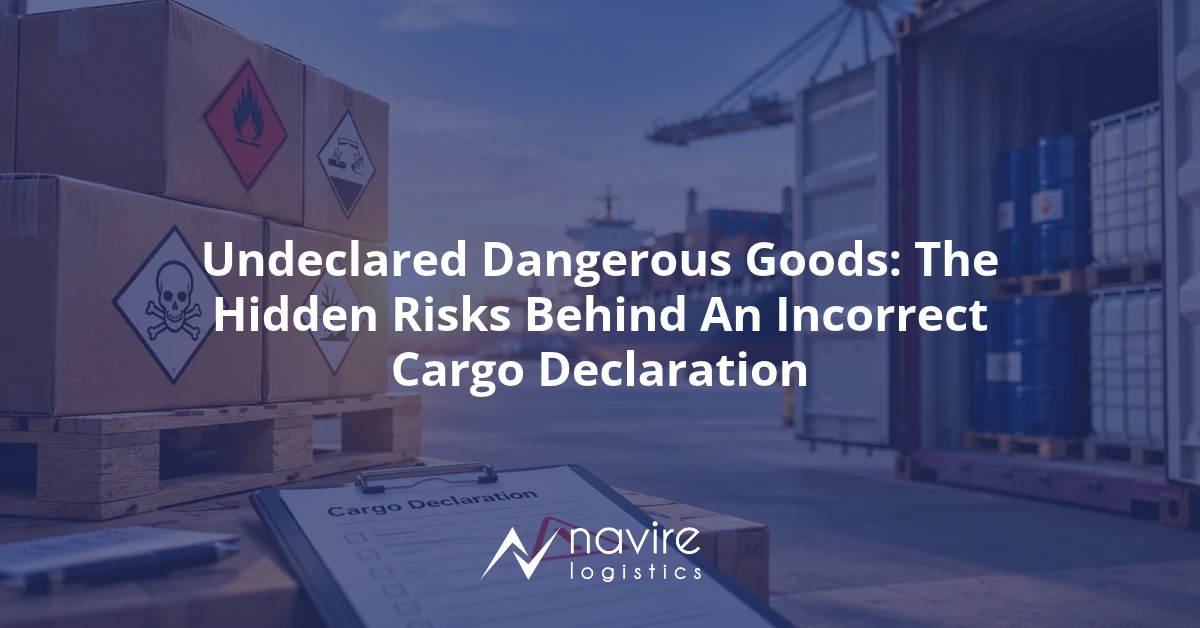
A shipment can look completely ordinary on the outside while hiding a serious risk within. A misdeclared chemical, an improperly documented battery or an overlooked hazardous substance can turn routine cargo transportation into a major safety concern. In logistics, what you fail to declare can be just as dangerous as what you ship.
Undeclared dangerous goods are more than a documentation issue. They can threaten personnel safety, disrupt transportation operations and expose businesses to financial losses and regulatory consequences. For companies involved in international trade, understanding these risks is essential to maintaining safe, compliant and reliable supply chains.
What Are Undeclared Dangerous Goods?
Dangerous goods are substances or articles that can pose risks to people, property, transport operations or the environment during transportation. Depending on their characteristics, they may be flammable, explosive, corrosive, toxic, infectious or capable of reacting dangerously under certain conditions.
Common examples include certain chemicals, lithium batteries, aerosols, flammable liquids, gases and other regulated materials. However, not every product within these categories is automatically subject to the same transport requirements. Classification depends on the product’s properties and the regulations applicable to the chosen mode of transport.
Undeclared dangerous goods are items offered for transportation without being identified as dangerous goods. Misdeclared dangerous goods, meanwhile, may be identified incorrectly or described inaccurately in the shipment documentation.
These errors can occur when a business does not recognise a product’s hazardous properties, provides incomplete information or fails to follow the applicable declaration procedures.
The International Air Transport Association (IATA) identifies undeclared and misdeclared dangerous goods as a significant air cargo safety concern. Its guidance highlights the importance of identifying risks throughout the supply chain rather than relying on cargo screening alone.
Why Accurate Cargo Declarations Matter
Cargo declarations provide essential information about what is being transported. They help carriers, freight forwarders, handling teams and relevant authorities determine how shipments should be accepted, documented, handled and transported.
When dangerous goods are correctly declared, the parties involved can apply the appropriate precautions. This may include specific packaging, labelling, documentation, handling procedures, segregation requirements and transport restrictions.
For sea freight, the International Maritime Organization’s International Maritime Dangerous Goods (IMDG) Code establishes requirements for the transport of dangerous goods in packaged form. These provisions cover areas such as classification, packing, marking, labelling, documentation, stowage and segregation.
Air transportation follows its own applicable dangerous goods requirements, while road transport may be governed by relevant national and international rules.
An incorrect declaration can therefore affect more than a single document. It can prevent the transportation team from making informed decisions about the cargo and the precautions required to move it safely.
The Hidden Risks of Undeclared Dangerous Goods
1. Increased Safety Risks During Transportation
The most serious consequence of undeclared dangerous goods is the potential threat to human safety.
Certain substances can ignite, leak, release harmful vapours or react with other materials when exposed to heat, pressure, moisture or incompatible substances. Batteries and other products can also present specific risks if damaged, improperly packed or transported without the required controls.
When a shipment’s contents are not accurately identified, personnel may be unaware of the precautions needed to handle it. In an emergency, incomplete cargo information can also make it harder to identify the hazard and respond appropriately.
Correct declarations are therefore an important part of preventing avoidable incidents across the transportation network.
2. Incorrect Stowage and Cargo Segregation
Not all cargo can be stored or transported together. Some dangerous goods require separation from incompatible substances, while others have specific stowage or handling requirements.
If a shipment is incorrectly declared, the carrier or handling team may not have the information needed to apply the appropriate precautions.
This can increase the risk of dangerous interactions, cargo damage or other safety incidents. It can also affect the way surrounding shipments are loaded, stored or managed.
Accurate cargo information allows logistics teams to make better-informed decisions before goods enter the transportation process.
3. Shipment Rejection and Unexpected Delays
Undeclared dangerous goods can be discovered during cargo acceptance checks, security screening, inspections or other operational procedures.
When a discrepancy is identified, the shipment may be held for further assessment. Depending on the circumstances, it may be rejected, require corrected documentation or need to be repacked and prepared in accordance with applicable requirements.
These disruptions can affect delivery schedules, production planning and customer commitments.
For businesses operating with tight inventory cycles or time-sensitive deliveries, even a short delay can create additional pressure across the supply chain.
4. Additional Costs and Commercial Consequences
An incorrect cargo declaration can create costs that extend beyond the original transportation charge.
Depending on the shipment and the circumstances, businesses may face additional storage, handling, inspection, repacking or rebooking expenses. Delays can also affect downstream operations, particularly when goods are required for manufacturing, retail distribution or scheduled customer deliveries.
Where a misdeclaration breaches applicable regulations or contractual requirements, further consequences may arise, including penalties or claims. The outcome depends on the relevant rules, the nature of the breach and the facts of the case.
For businesses, accurate declarations are not simply an administrative responsibility. They are part of managing operational risk and protecting commercial relationships.
How Do Dangerous Goods Go Undeclared?
Several factors can contribute to cargo misdeclaration.
- Incomplete product information: A shipper may not fully understand a product’s composition or transport classification, particularly when handling unfamiliar materials or products containing batteries, chemicals or pressurised components.
- Documentation discrepancies: The information supplied by the manufacturer, supplier, exporter and shipping team may not match. Product descriptions, safety data and shipping documents must be reviewed for accuracy and consistency.
- Limited awareness of transport requirements: A product may appear harmless during ordinary use but still be subject to dangerous goods requirements during transportation. Requirements can also differ between air, sea and road freight.
- Insufficient verification: When cargo information is accepted without appropriate checks, errors can pass through several stages of the logistics process before being identified.
- Deliberate misdeclaration: In some cases, a shipper may intentionally omit information to avoid additional costs or restrictions. This can expose the shipment and other parties in the transportation chain to serious risks.
Addressing these causes requires clear communication, accurate product information and appropriate checks before cargo is offered for transportation.
How Businesses Can Reduce the Risk
Preventing undeclared dangerous goods begins before a shipment reaches the freight forwarder, port, airport or warehouse. Businesses can strengthen their processes by focusing on five key areas.
- Verify product classification. Determine whether the goods are regulated as dangerous goods under the rules applicable to the intended transport mode. Seek qualified guidance when the classification is unclear.
- Maintain accurate documentation. Ensure that cargo descriptions, declarations and supporting documents reflect the actual contents of the shipment. Where required, obtain the relevant safety data and dangerous goods documentation.
- Follow packaging and labelling requirements. Dangerous goods may require specific packaging, marks, labels and handling instructions. These requirements should be confirmed before dispatch rather than addressed after a discrepancy is discovered.
- Communicate across the supply chain. Manufacturers, suppliers, exporters, freight forwarders and carriers need reliable information about the goods being transported. Changes in product composition, packaging or shipment details should be communicated promptly.
- Introduce pre-shipment verification. Establish a review process to identify missing information, inconsistent documents and potential classification issues before cargo is tendered for transportation. Staff involved in shipping should also understand when specialist advice is necessary.
These measures help businesses identify potential problems earlier, reduce avoidable disruptions and support safer cargo movement.
Supporting Reliable Cargo Movement with Navire Logistics
Safe and efficient cargo transportation depends on more than choosing a route or booking space with a carrier. It also requires accurate shipment information, effective coordination and careful planning at each stage of the logistics process.
Navire Logistics supports businesses with freight forwarding by air, sea and land, customs clearance, warehousing and GCC transportation solutions. These services help businesses coordinate cargo movement across domestic and international supply chains.
For shippers handling products that may be classified as dangerous goods, it is important to confirm the applicable transport requirements and ensure that the shipment is correctly classified, declared, packaged and documented before booking. Any specialist dangerous goods handling or compliance requirements should be verified with an appropriately qualified provider.
By prioritising accurate information and effective coordination, businesses can reduce avoidable shipping disruptions and make more informed logistics decisions.
Planning an international shipment? Connect with Navire Logistics to discuss your freight forwarding, customs clearance, warehousing and transportation requirements.



